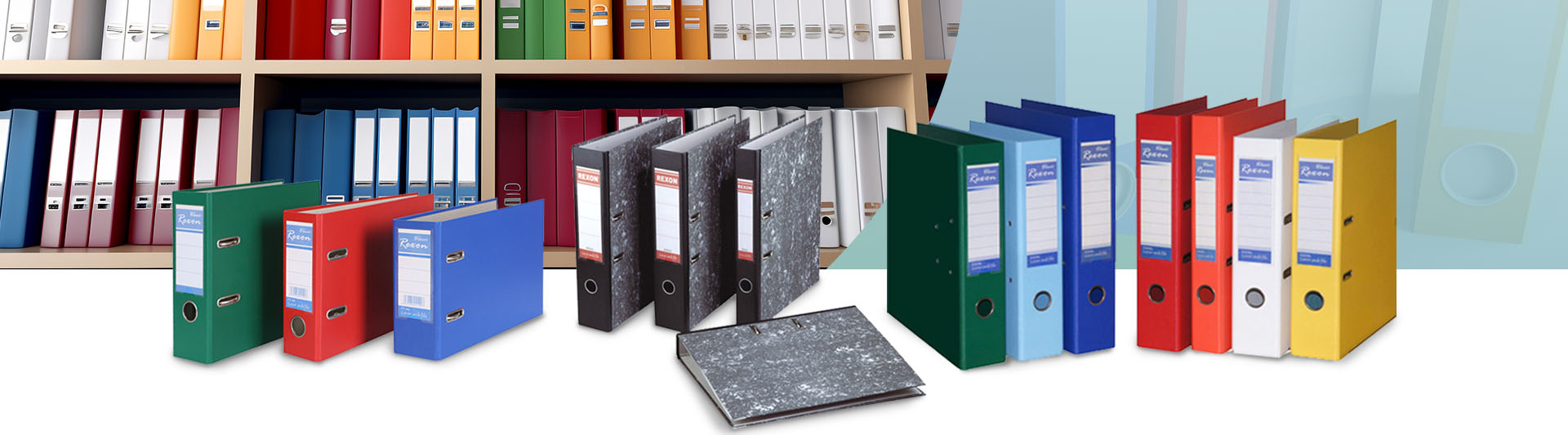
Ring Binders are judged by how they perform after repeated opening, closing, shelf storage, and document handling. A reliable binder should protect paper, keep pages aligned, support smooth turning, and maintain its shape after long-term use. Buyers often compare cover material, board stiffness, ring type, rivet strength, spine width, printing finish, and packing method before placing an order. For REXON, reliability is not only about making the binder look neat. It is about helping customers build a stable filing product range that can serve offices, schools, training centers, archive rooms, and stationery retail channels with fewer quality complaints.
A ring binder needs a firm cover because the cover supports the whole file when it is opened, carried, or stored upright. Weak board may bend at the corner, curve along the spine, or lose shape after carton stacking.
Key points buyers should check include:
Board thickness and stiffness
Surface material such as paper, PP, PVC, or laminated cover
Edge wrapping quality
Spine strength
Corner resistance during packing
A stronger cover gives the binder better shelf stability and a cleaner appearance after repeated use. For catalog, school, and office filing needs, cover strength is often the first sign of product quality.
Size accuracy affects user experience. ISO 216 defines A4 paper as 210 mm × 297 mm, which is widely used in many global office markets. North American markets often use Letter size at 8.5 × 11 inches, according to Microsoft globalization documentation.
This size difference should be confirmed before production. A binder made for the wrong paper size may cause poor page turning, exposed paper edges, or mismatched index dividers. Our team can help buyers confirm A4, Letter, or other size requirements before sampling.
The ring mechanism is the working center of the binder. Even when the cover looks good, poor rings can create immediate complaints. A good mechanism should open smoothly, close tightly, and keep both sides aligned.
Important inspection points include:
Ring closing accuracy
Opening force
Rivet tightness
Ring surface smoothness
Paper turning clearance
Long-term tension stability
Ordinary 80 gsm A4 paper weighs about 5 grams per sheet. When a binder holds hundreds of sheets, the mechanism and rivets must carry real pressure. This is why durable ring binders need more than a decorative cover.
Different ring types serve different filing needs. O-ring binders are common for daily documents. D-ring binders can hold more paper neatly because pages sit flatter near the spine. Multi-ring mechanisms are useful for specific markets or document systems.
| Ring Type | Common Use | Buyer Benefit |
|---|---|---|
| O Ring | Daily office filing | Simple and cost-effective |
| D Ring | Higher capacity filing | Better paper alignment |
| 3 Ring | North American market | Matches common punched paper |
| 2 Ring | A4 office use | Common for simple files |
| Multi Ring | Catalog or presentation use | More stable page turning |
For custom ring binders, ring type should be decided together with paper size, spine width, expected capacity, and market selling price.
Many buyers use binders for private label programs, retail stationery lines, school supply ranges, or company document systems. Printing quality affects shelf appearance and brand trust.
Buyers should confirm:
Logo position
Cover artwork size
Spine label layout
Color tolerance
Surface finish
Barcode area
Packaging label
A clear design helps the binder look organized on shelves and easier to identify in office use. REXON can support practical customization details based on different market needs.
A good sample is only the beginning. Large orders require repeated quality across every carton. Buyers should pay attention to color consistency, ring alignment, cover cutting, rivet fixing, surface cleanliness, and packing condition.
REXON supports buyers with product matching, sample confirmation, material coordination, and production inspection. This helps reduce the risk of mixed quality when orders include several colors, sizes, or packaging styles.
Ring binders can be damaged during shipping if packaging is too weak. Common problems include crushed corners, pressed spines, scratched covers, and deformed ring mechanisms. The International Safe Transit Association provides widely used transport testing procedures for handling, compression, vibration, and shipment stress. This reminds buyers that packing is part of product quality.
Packing should protect:
Binder corners
Spine area
Ring mechanism
Printed cover surface
Carton stacking strength
For large-volume orders, strong export packaging can reduce claims and protect profit after delivery.
Reliable ring binders come from the right balance of cover strength, accurate sizing, smooth mechanisms, suitable ring type, clean printing, stable production, and safe packing. As an office binder supplier, REXON can help buyers develop practical binder programs for office supply, school stationery, archive filing, retail shelves, and wholesale distribution. A well-planned binder is easier to sell, easier to reorder, and more dependable for daily document storage.
