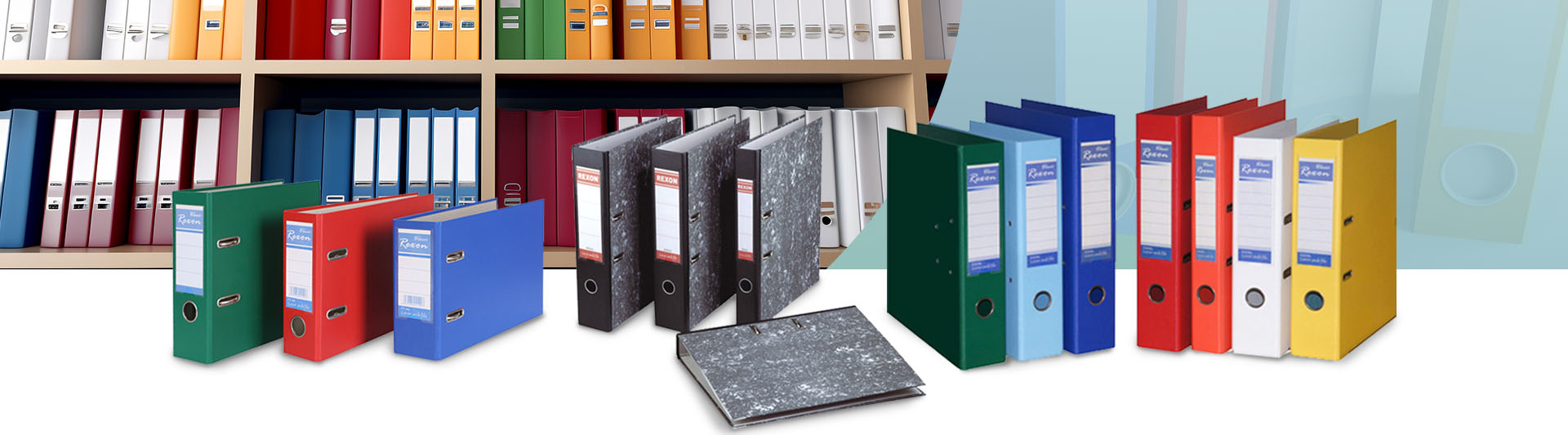
Quality in file manufacturing is not achieved by visual inspection alone. It is built through a combination of material selection, process control, structural design, and consistent validation across production stages. As global demand for office filing products continues to grow, buyers are placing higher expectations on durability, uniformity, and long-term performance. According to Fortune Business Insights, the office supplies market reached USD 177.53 billion in 2024, with filing products remaining a stable segment driven by education, administration, and corporate documentation needs.
Ensuring reliable output requires a systematic approach rather than isolated checks. Manufacturers that implement full-cycle file manufacturing quality control systems are better positioned to maintain consistency across bulk production and reduce defect rates.
The foundation of a high-quality file begins with raw materials. Board density, paper coating, adhesive type, and metal components must be selected based on actual usage scenarios rather than cost alone. For example, thicker greyboard with higher gsm provides better resistance to bending and shelf pressure, which is critical for archive applications.
Material inconsistency is one of the leading causes of product variation in large shipments. Differences in board stiffness, coating thickness, or metal quality can lead to uneven performance. To avoid this, manufacturers should establish incoming material verification protocols, ensuring every batch meets predefined technical parameters.
In high-volume production, material traceability also becomes essential. It allows manufacturers to quickly identify and isolate issues if a defect appears during later stages.
Production control is the core of quality assurance. Each step, from board cutting to lamination, edge folding, mechanism installation, and final assembly, must follow standardized procedures. Small deviations in glue application or folding pressure can affect long-term durability.
A structured office file inspection process should be integrated directly into the production line rather than treated as a final checkpoint. Inline inspections help detect problems early, reducing rework and minimizing waste.
Key process control points typically include:
Board cutting accuracy and dimensional tolerance
Adhesive distribution uniformity during lamination
Edge folding precision to prevent cracking
Rivet fixation strength for metal components
Alignment of mechanisms to ensure smooth operation
Consistency at these stages ensures that every unit performs the same way, especially in bulk orders.
Beyond visual checks, functional testing is essential to verify real-world performance. File folders are subject to repeated handling, opening, closing, and load pressure. Without proper testing, hidden weaknesses may only appear after delivery.
A robust document file testing standard should include:
opening and closing cycle tests for metal mechanisms
load-bearing tests to simulate document weight
compression tests for storage stacking conditions
humidity resistance tests for different environments
surface abrasion tests for coated materials
For products such as Lever Arch File a4, mechanism reliability is particularly critical. The arch system must maintain consistent clamping force after thousands of cycles. Testing should simulate actual usage scenarios rather than laboratory-only conditions to ensure realistic results.
Surface quality directly affects product perception and acceptance. Even when structural performance meets requirements, visual defects can lead to rejection. Common issues include uneven lamination, color variation, scratches, and poor label alignment.
To maintain finishing standards, manufacturers should establish clear criteria for surface inspection. This includes color matching across batches, print clarity, and uniform coating thickness. Inspection teams must be trained to identify subtle defects that may not be immediately obvious but can impact customer satisfaction.
Effective quality control for file folders also involves monitoring environmental conditions during production. Temperature and humidity can influence adhesive behavior and material stability, especially in laminated products.
Quality does not end at the factory gate. Improper packaging can damage even well-manufactured products during transportation. Compression, vibration, and moisture exposure are common risks in global shipping.
Manufacturers should design packaging systems that protect structural integrity, including reinforced cartons, proper stacking methods, and internal supports to prevent movement. According to the American Forest and Paper Association, paper-based packaging remains widely used, with recycling rates exceeding 60 percent in recent years, making material efficiency and protection equally important.
Testing packaging through drop tests and stacking simulations helps ensure products arrive in the same condition as they leave the factory.
Quality assurance is not a one-time effort. It requires continuous monitoring, data analysis, and process refinement. Manufacturers should track defect rates, customer feedback, and production deviations to identify recurring issues.
By analyzing production data, companies can adjust process parameters, improve material selection, and enhance inspection standards. This creates a feedback loop that strengthens overall product reliability over time.
REXON applies this approach by focusing on specialized file manufacturing, particularly in lever arch systems and structured filing solutions. With long-term experience in document storage products, the company integrates material control, process standardization, and functional testing into its production model, supporting consistent quality across large-scale orders.
Ensuring quality in file manufacturing requires a comprehensive system that covers materials, processes, testing, finishing, and logistics. Each stage contributes to the final product’s durability and usability. Manufacturers that invest in structured quality control systems and continuous improvement are better equipped to deliver consistent performance, reduce defects, and meet evolving market expectations.
