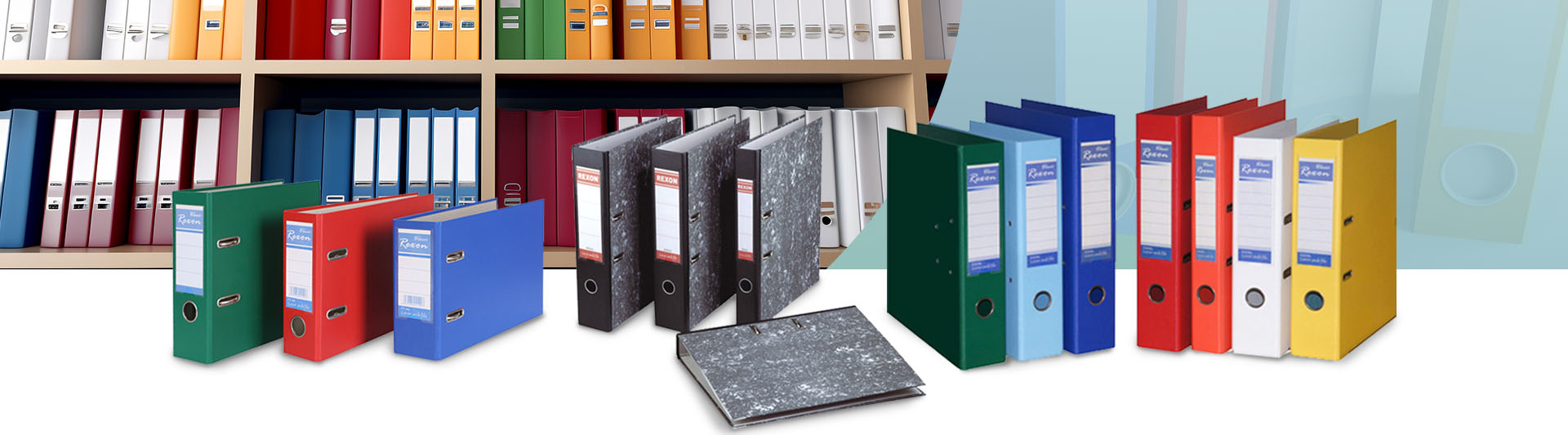
File folders still play a critical role in document control, archive management, education supply, and administrative workflows. That matters because the category remains commercially significant. Grand View Research values the global file folders segment at USD 6,104.3 million in 2024, while Fortune Business Insights estimates the broader office supplies market at USD 177.53 billion in 2024. Even in a more digital workplace, physical filing products remain part of daily operations, especially where contracts, invoices, records, and compliance documents must be stored, moved, and retrieved efficiently.
Yet buyers often discover that a folder that looks acceptable on first inspection may fail after repeated handling, shelf pressure, humid storage, or long shipping cycles. Most complaints are not about appearance alone. They usually involve structure, durability, consistency, and fit for the end-use environment. Understanding these risks is the first step in preventing file folder quality issues before they turn into replacement cost, user complaints, or damaged records.
Many folder failures begin with a mismatch between product design and real working conditions. A folder used for light internal circulation does not face the same pressure as one used in long-term archive rooms, school offices, government departments, or large-volume distribution channels. Problems also become more visible in large shipments, where minor variation in board thickness, glue application, rivet setting, edge wrapping, or metal mechanism quality gets multiplied across thousands of units.
This is why document file defects analysis should focus on both material selection and production control. Surface paper, gray board density, PVC finish, lever arch mechanism, ring tension, edge folding accuracy, and carton protection all affect actual field performance. In bulk purchasing, even a small tolerance gap can create a high complaint ratio.
One of the most common issues is board deformation. When the internal board lacks enough density or stiffness, the folder can bend during storage or transportation. Once that happens, the spine loses shape, the cover sits unevenly, and the folder no longer stacks neatly. For archive-heavy environments, that quickly becomes a usability problem rather than a cosmetic one.
A second issue is weak corner protection. Repeated lifting, shelf friction, and carton compression can wear corners early. This makes folders look old before they have reached the end of their service life. It also affects perceived quality in retail and institutional settings.
A third problem is cover delamination. If the outer wrap, printed paper, or laminated layer is not bonded evenly, bubbles, edge lifting, or peeling can appear over time. In humid environments, poor bonding becomes even more obvious. The result is a shorter product life and a less professional appearance on the shelf.
For many users, the most serious office folder failure reasons come from the metal components rather than the board. Lever arch systems, compressors, rings, and riveted parts must perform smoothly every day. If the mechanism opens roughly, closes with poor alignment, or loses tension after repeated use, the folder stops being reliable.
This issue is especially relevant for an a4 folder lever arch product, because the mechanism is central to its value. Users expect fast page insertion, secure holding force, and clean retrieval without snagging or accidental release. A weak arch system can lead to loose paper stacks, torn punched holes, and wasted handling time.
At the operational level, common mechanism-related problems include:
misaligned rings or arches that prevent neat closure
unstable rivets that loosen after use
spring fatigue that reduces clamping force
rough metal edges that scratch paper or hands
inconsistent mechanism installation across a production batch
These are often the most visible common file folder problems bulk orders because the end user notices them immediately.
Print clarity, color consistency, and surface cleanliness matter more than many buyers expect. In office supplies, product presentation influences both shelf appeal and institutional acceptance. A folder with uneven lamination, poor marble pattern clarity, glue marks, odor, or color mismatch may still function, but it will not support a professional brand image.
This becomes even more important for private label programs. A filing product is often part of a wider stationery line, so visual mismatch between batches creates avoidable friction in replenishment. Surface defects may include scratches, dull film, warped label windows, poor spine label fit, or inconsistent embossing. None of these issues should be treated as minor when the product is sold in repeat programs.
Some folder complaints are created outside the production line but could still be prevented by the manufacturer. If outer cartons are weak, pallet loading is unstable, or inner packing does not control movement, compression damage can happen before the goods reach the warehouse. Corners collapse, boards warp, and mechanisms deform under stacking pressure.
This matters because paper-based stationery products also sit within a broader sustainability and recovery system. AF&PA reports that in 2024 the U.S. paper recycling rate was 60 percent to 64 percent and the cardboard recycling rate was 69 percent to 74 percent, showing the continued importance of paper and board materials in responsible packaging decisions. Better structural design and smarter packaging help both durability and material efficiency.
Below is a practical checkpoint summary for evaluating file folders before volume shipment.
| Check area | Common problem | What to verify |
|---|---|---|
| Board strength | bending and spine collapse | board gsm, density, compression resistance |
| Cover lamination | bubbling and peeling | adhesive uniformity, humidity tolerance, edge bonding |
| Metal mechanism | loose closure and poor alignment | opening cycles, rivet tightness, ring alignment |
| Edge finishing | worn corners and cracked folds | fold precision, wrap quality, corner reinforcement |
| Printing and color | inconsistent appearance | batch color control, surface cleanliness, logo accuracy |
| Packaging | transit damage | carton strength, pallet stability, drop and stacking protection |
REXON positions itself as a specialized manufacturer in Lever Arch Files and mechanisms, with roots going back to 2001. On its website, the company highlights a focused product range that includes lever arch files, Ring Binders, folders, elastic paper boxes, and hanging files. REXON also states that its lever arch files are made with strong backs and metal arch mechanisms intended to hold documents securely for long-term use. This specialization matters because filing products require stable manufacturing know-how, not just generic paper converting capacity.
That manufacturing focus becomes more visible in its product structure. REXON describes marble lever arch files with removable mechanisms, slide-in plates, rado slots, finger rings, insert labels, and multiple board specifications including 1000 gsm, 1200 gsm, and 1500 gsm options. It also notes dual-sided storage configurations for higher capacity without increasing footprint. These details show a supplier that understands real filing use cases such as archive density, handling convenience, and custom branding support.
For buyers, the advantage of working with a focused producer is not only supply continuity. It is the ability to reduce mismatch between specification and actual use. When the supplier understands mechanism performance, board structure, surface finish, and packaging as one system, the final product is more likely to stay consistent across repeat orders.
Common problems with file folders usually come down to four areas: weak structure, unreliable mechanisms, poor finishing, and inadequate packaging. These issues may look small in samples, but they become expensive in mass shipment, daily office use, and long-term brand programs. Careful material selection, tighter production control, and realistic performance testing are what separate a low-cost folder from a dependable filing product.
For companies sourcing filing supplies at scale, the smarter question is not only how a folder looks today, but how it will perform after transport, shelf pressure, frequent handling, and repeated reordering. That is where an experienced manufacturer such as REXON brings practical value through category focus, stable product engineering, and a broader filing product portfolio.
