Ring Binder mechanisms affect how smoothly a binder opens, how firmly it locks, and how long it can handle repeated page turning. For buyers placing repeat orders, the mechanism is not just a small accessory inside the cover. It decides whether the finished binder feels stable, whether punched paper stays aligned, and whether end users experience loose rings after daily use.
REXON produces different stationery filing products for office, school, retail, and archive use. From our manufacturing experience, buyers should not judge ring binder mechanisms only by appearance. Ring shape, metal thickness, trigger design, rivet strength, opening gap, and surface plating all influence final performance. A binder with a nice printed cover can still receive complaints if the metal mechanism is weak or poorly matched with the paper capacity.
A binder used once a month does not require the same mechanism as a binder opened many times each day. Office ring binders used for reports, invoices, training files, and project records need smooth opening and accurate ring closure. When the rings do not meet evenly, paper holes can tear and users may feel the binder is difficult to handle.
Standard industry testing for filing products often checks ring alignment, opening force, closing force, corrosion resistance, and repeated open-close cycles. In practical stationery production, buyers usually focus on whether the mechanism remains tight after hundreds or thousands of uses. For high-rotation office supply programs, strong binder mechanisms help reduce returns and improve repeat purchase confidence.
Round ring binder mechanisms are widely used for light and medium filing. They are simple, cost-efficient, and suitable for school stationery, office document sorting, and general retail packs. The round shape allows pages to turn easily, especially when the binder is not fully loaded.
For buyers who need competitive pricing and standard shelf products, round rings are a practical choice. Common ring diameters include 1 inch, 1.5 inch, and 2 inch, depending on market demand. Based on standard 20 lb paper reference, a 1 inch round ring usually holds around 175 to 200 sheets, while thicker paper or dividers reduce actual capacity.
D ring mechanisms are better for buyers who need higher sheet capacity and cleaner paper alignment. The straight side of the ring keeps punched sheets stacked more evenly, which is helpful for training manuals, contract files, reference documents, and office archives.
Compared with round rings of similar size, D ring binders can hold roughly 20% to 25% more sheets according to common filing capacity references used in the stationery industry. This makes D ring mechanisms a good option for buyers who want stronger storage performance without increasing the binder spine too much.
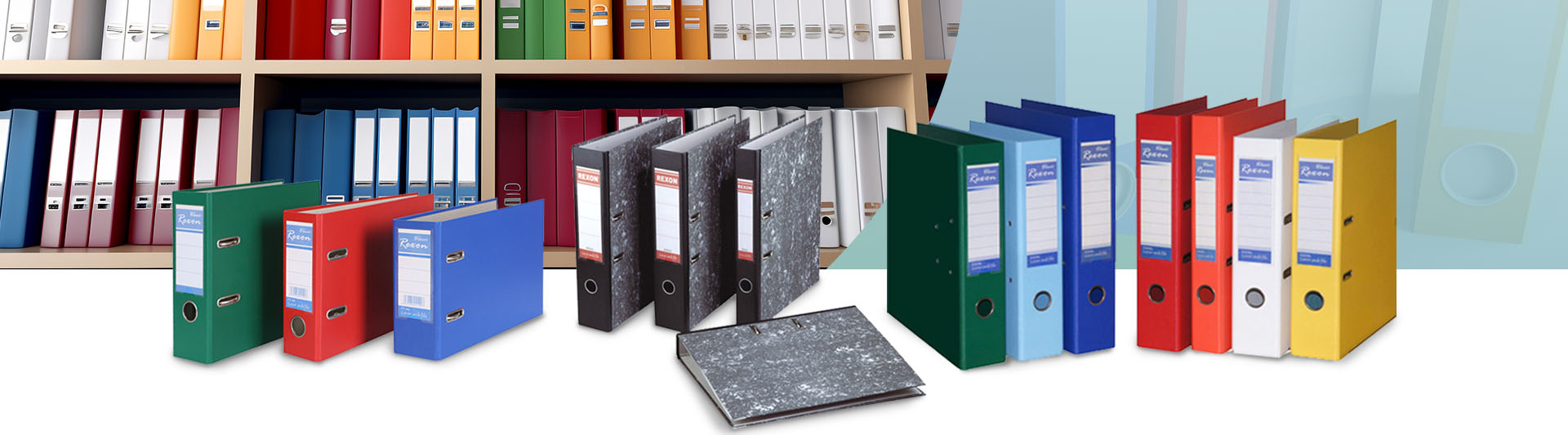
Lever arch mechanisms are designed for heavy-duty filing. They include a lever opener and compressor bar, helping users open and close thick paper stacks with less effort. This structure is common in archive files, accounting documents, administrative records, and long-term office storage.
A Lever Arch File usually needs stronger board, better spine support, and accurate metal placement. If the cover board is too soft or the rivets are poorly fixed, the mechanism may pull away from the cover after repeated use. REXON checks mechanism fitting, board firmness, and compression performance during production to support stable export quality.
| Mechanism Type | Best Use | Capacity Level | Buyer Priority |
|---|---|---|---|
| Round Ring | School and light office filing | Medium | Cost control |
| D Ring | Office manuals and reports | High | Page alignment |
| Slant D Ring | Frequent page turning | Medium to high | Smooth handling |
| Lever Arch | Heavy archive filing | Very high | Long-term storage |
As a binder mechanism manufacturer partner for many filing products, REXON can help buyers choose suitable mechanisms according to sheet capacity, cover material, order quantity, and sales channel. We can support different ring types, customized cover printing, size adjustment, logo placement, color matching, and export carton planning.
The right mechanism should match the binder’s real use. A low-price school binder may need simple round rings. A corporate presentation binder may need slant D rings for smoother page turning. An archive file may need lever arch hardware for heavier loading. Our team reviews these details before production so buyers can avoid unnecessary cost and reduce quality risk.
No single mechanism works best for every order. Round rings are cost-friendly, D rings offer better capacity, slant D rings improve handling, and lever arch mechanisms support heavy filing. Buyers who understand the document load, user frequency, and retail positioning can make better purchasing decisions.
REXON provides practical support from material selection to mechanism assembly, helping buyers develop ring binders that fit office, retail, school, and archive markets with reliable daily performance.
