Business documents do not lose value after daily use. Contracts, invoices, employee records, technical files, purchase orders, certificates, and compliance documents often need to be stored for years. When these papers are not organized properly, companies may spend too much time searching, checking, replacing, or protecting important information.
An archive filing system solution helps businesses classify, store, protect, and retrieve documents in a structured way. It is not only about putting papers into folders. It connects file categories, labels, storage formats, shelf space, department access, and long-term document protection into one practical management method.
Many companies manage documents across different departments. Finance teams keep invoices and tax records. Sales teams keep contracts and customer files. HR teams keep employee materials. Production teams keep inspection reports and technical records. Without a clear system, documents may be stored in different formats, different cabinets, or different locations.
A good document storage archive system reduces this confusion. It allows staff to know where a file belongs, how long it should be kept, and how it can be found when needed. This is especially important for companies with repeated audits, export documents, warranty files, supplier records, and internal approval documents.
According to ISO 15489 records management guidance, business records should remain authentic, reliable, usable, and properly protected during their retention period. This shows why archive storage is not only a stationery issue, but also part of business risk control.
An archive filing system usually includes several file storage products working together. Different documents need different formats because paper size, document thickness, use frequency, and storage time are not the same.
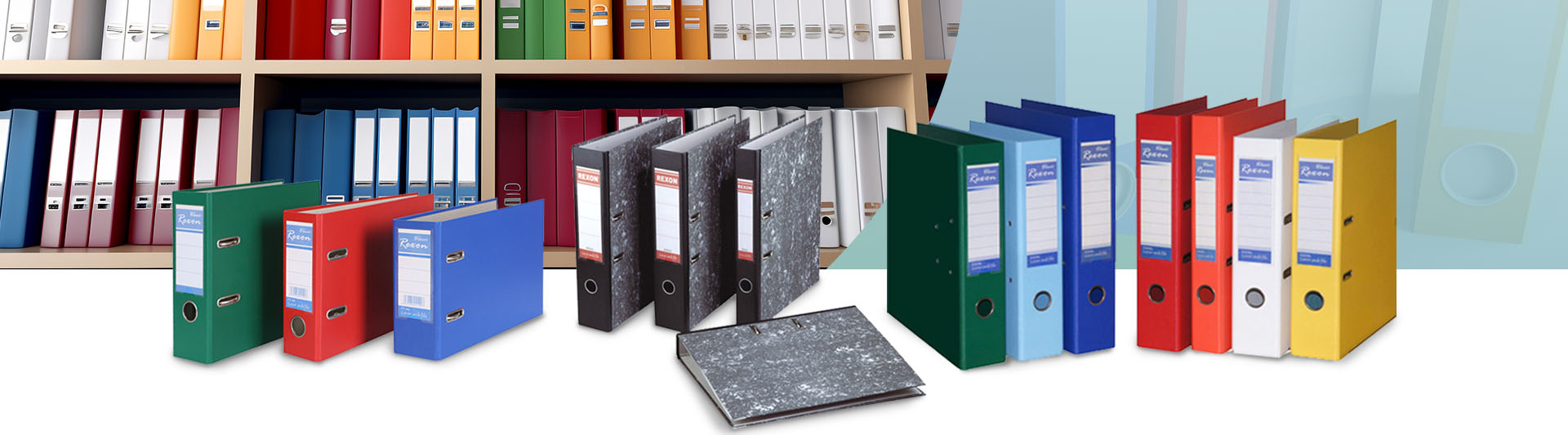
Common archive products include Lever Arch Files, box files, expanding files, hanging folders, document wallets, index dividers, file boxes, and archive cartons. A contract that needs frequent checking may be placed in a lever arch file, while old financial records may be packed into archive boxes for long-term storage.
As an office archive file supplier, REXON can support different file formats for business storage needs. This allows customers to build a more complete filing structure instead of purchasing scattered products from different sources.
A practical archive system starts with classification. Businesses can divide files by department, year, project, customer, supplier, document type, or retention period. The key is to make the structure easy for staff to understand and repeat.
For example, finance documents can be grouped by fiscal year and document type. HR documents can be grouped by employee status and record category. Project files can be grouped by project name, contract number, and delivery stage. Once the logic is clear, file labels, spine cards, color coding, and storage boxes can follow the same structure.
This method helps reduce search time. It also helps new employees understand the archive system faster, which lowers training pressure and improves office efficiency.
Business archive files must be stronger than ordinary daily-use folders. Long-term storage requires stable material, firm structure, clear labeling space, and proper carton packaging. Weak files may deform, tear, or lose shape after months of shelf storage.
| Selection Point | Business Value |
|---|---|
| Material thickness | Keeps files stable during long-term storage |
| Spine width | Matches different document volumes |
| Label area | Makes retrieval faster and more accurate |
| Closure structure | Protects documents during movement |
| Carton packing | Reduces damage during bulk delivery |
| Color consistency | Keeps office archive shelves organized |
A business archive file storage solution should also consider warehouse handling. When retailers, distributors, or corporate buyers order in bulk, outer cartons must be strong enough for stacking and transport. Clear carton marks also help warehouse teams sort products more efficiently.
Different companies have different archive rules. Some need color-coded files for departments. Some need private label packaging for office supply channels. Some need customized spine labels, barcode stickers, or retail-ready packs. Standard files may not always match these needs.
REXON supports OEM and ODM customization for archive file products, including material selection, size adjustment, color matching, packaging design, and logo printing. This helps buyers create products that match their own market position, sales channel, and storage requirements.
For wholesale orders, customization also improves product recognition. A consistent file series can make office shelves, retail displays, and distributor catalogs look more professional.
A document archive system supplier should offer more than product lists. Buyers should check whether the supplier can control samples, production details, packaging, inspection, and delivery communication. Archive file products may look similar, but small differences in thickness, ring strength, folding accuracy, and packaging quality can affect the final user experience.
REXON focuses on stable file product supply for office, school, retail, and corporate storage needs. With category coverage and customization support, REXON helps customers build practical archive filing products for repeated procurement and long-term sales.
An archive filing system helps businesses protect important documents, improve retrieval speed, and reduce office disorder. The right file products make this system easier to build and easier to maintain. For buyers who need consistent quality, customized packaging, and bulk supply support, REXON can provide archive file solutions that match real business storage needs.
