Organized document handling plays a direct role in productivity, accuracy, and daily workflow stability. Even with increasing digital adoption, physical documents remain essential for contracts, approvals, logistics paperwork, and financial records. Data from the United States Environmental Protection Agency shows that paper materials still account for tens of millions of tons in annual waste streams, reflecting the scale of paper usage across industries. At the same time, workplace research from Princeton University confirms that cluttered environments reduce focus and task efficiency. These factors highlight the importance of office filing efficiency improvement as a core operational priority.
An efficient filing system starts with a logical structure. Documents should be categorized based on function, department, or timeline rather than random storage habits. A well-planned document organization system office typically includes three levels: active files, reference files, and archived records.
Active files are accessed daily and should be stored within easy reach. Reference files are used periodically and can be placed in shared cabinets. Archived records require long-term storage with clear indexing. This layered approach reduces confusion and supports faster document retrieval across teams.
Consistent labeling is one of the simplest ways to improve efficiency. Files should follow a unified naming format that includes key identifiers such as project name, date, or department code. Color coding can also be introduced to visually separate categories.
The U.S. National Archives emphasizes that standardized labeling improves accessibility and reduces handling errors in record management environments. When every file follows the same logic, employees spend less time searching and more time working.
A structured process ensures that documents move smoothly from creation to storage and retrieval. Effective file storage workflow optimization involves defining clear steps for document intake, classification, filing, and archiving.
Typical workflow improvements include:
Assigning responsibility for document filing
Setting fixed storage locations for each category
Establishing regular review and clean-up cycles
Removing outdated or duplicate files
These steps help reduce redundancy and maintain a clean, functional filing system.
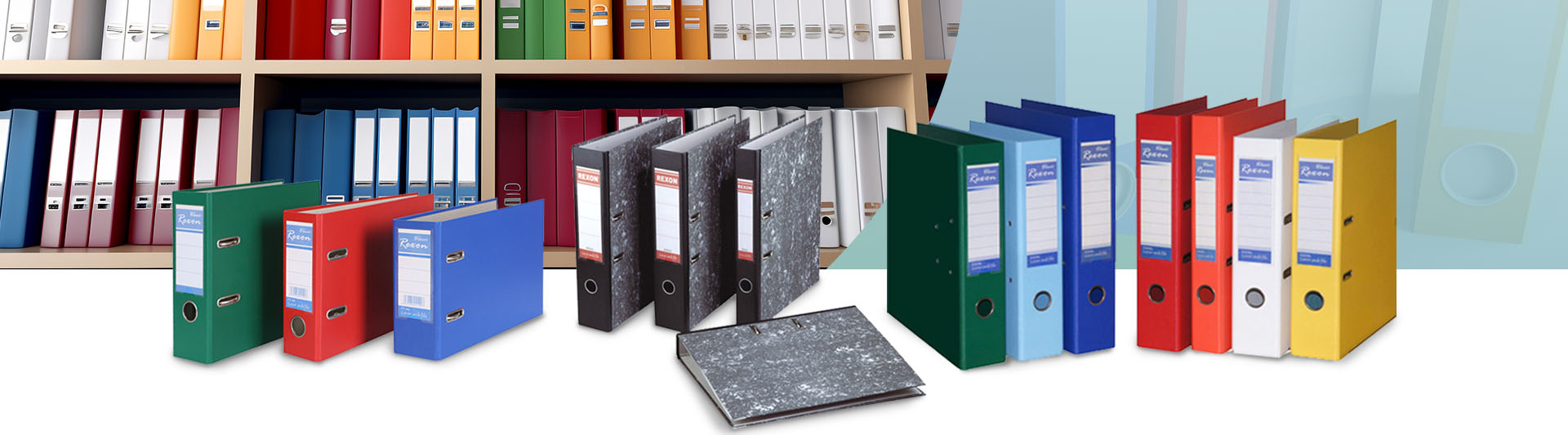
Storage tools directly affect usability and durability. Lever Arch Files, Ring Binders, hanging folders, and storage boxes should be selected based on document volume and usage frequency. REXON offers a wide range of filing products including lever arch files, binders, and hanging systems designed for long-term use and consistent performance.
Durable materials, strong mechanisms, and moisture-resistant surfaces help maintain file integrity over time. These features support efforts to improve office document filing system reliability, especially in high-usage environments.
Office space should support the filing system rather than limit it. Vertical storage, drawer-based systems, and categorized shelving allow better use of available space. Frequently used files should be placed closer to workstations, while less-used documents can be stored in dedicated archive areas.
Efficient layouts reduce unnecessary movement and improve workflow continuity. When combined with clear categorization, they create truly efficient file storage solutions that support daily operations.
An effective filing system requires ongoing evaluation. Offices should regularly check retrieval time, file accuracy, and storage capacity. Periodic audits help identify inefficiencies and areas for improvement.
| Evaluation factor | What to monitor | Impact |
|---|---|---|
| Retrieval speed | Time required to locate files | Reflects system clarity |
| File accuracy | Correct placement of documents | Reduces errors |
| Storage capacity | Available vs used space | Prevents overcrowding |
| System consistency | Adherence to filing rules | Ensures long-term usability |
Continuous improvement ensures the filing system remains aligned with business needs.
Filing efficiency is not achieved through a single product or tool. It comes from a combination of structured organization, standardized processes, durable storage products, and consistent execution. REXON supports this approach by providing reliable filing solutions that help maintain order and improve usability across office environments.
A well-optimized filing system reduces wasted time, minimizes document loss, and creates a more professional and controlled workspace. When every file has a clear place and every process follows a defined structure, efficiency becomes part of daily operations.
