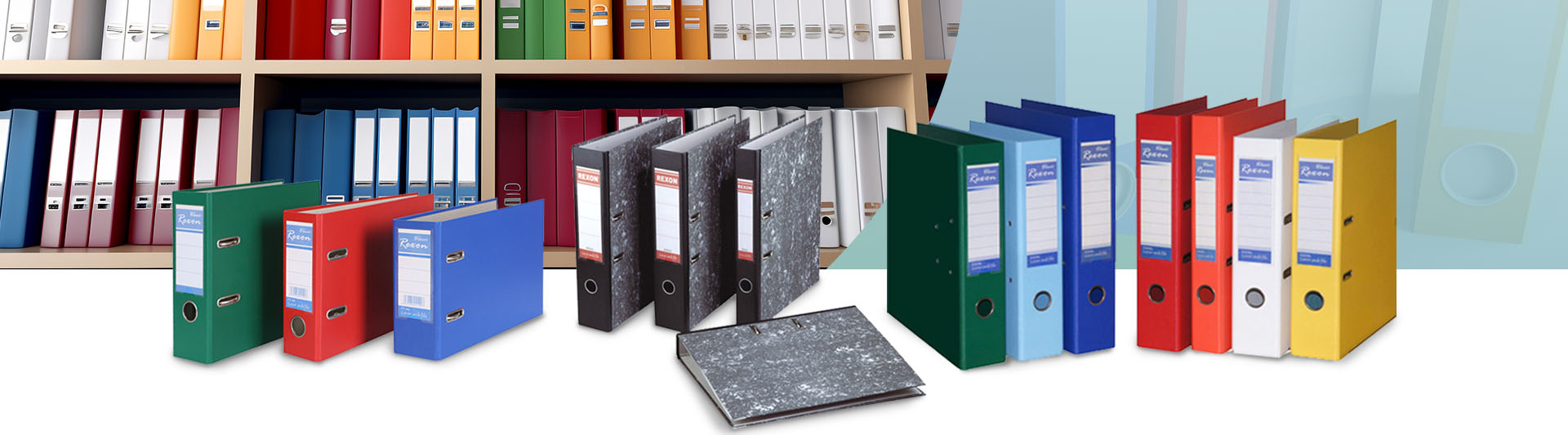
File folders may look simple, but the material behind them has a direct impact on durability, appearance, storage performance, and cost control. In office filing, archive storage, school supplies, and commercial stationery programs, the wrong material can lead to bent covers, torn edges, weak spine support, or poor print results. That is why material selection is one of the first decisions that shapes the quality of a folder product. REXON focuses on filing products such as Lever Arch Files, Ring Binders, folders, hanging files, and Paper Files, with manufacturing experience built since 2001. Its product range shows how different board, paper, plastic, and hardware combinations are used to meet different filing needs.
REXON explains office file construction through three major layers: the base board that creates structure, the surface covering that shapes appearance and resistance, and the hardware components that improve holding strength and usability. This way of thinking is useful because a file folder is rarely made from only one raw material. A finished product often combines paperboard, coated paper, PVC, polypropylene, steel parts, and reinforcement elements so that the folder performs well in daily handling.
Paperboard is one of the most common foundations in filing products. It gives the folder body its shape, keeps documents upright, and provides a good base for lamination, printing, embossing, and edge finishing. REXON shows this clearly in its lever arch and suspension folder products, including models built with 1200 gsm thick cardboard or 1200 gsm kraft paper for improved rigidity and repeated use. For many buyers, this remains the most practical option when they need a balance between cost, printability, and structural strength. In sourcing language, this is where terms such as cardboard file folder manufacturer become relevant, because core board quality often decides the final grade of the product.
The outside layer matters just as much as the inner board. Printed paper, colored paper, kraft finishes, marble paper, and coated cover sheets are used to improve appearance and add branding value. This outer layer also affects scratch resistance, color consistency, and shelf presentation. For office stationery programs that need a more premium look, the exterior covering can become a key selling point, especially when the folder is used in meetings, corporate records, or retail packaging displays. REXON’s marble and paper file ranges reflect this demand for visual differentiation without giving up functional filing performance.
Plastic remains essential in modern filing because it offers moisture resistance, wipe-clean surfaces, and a longer service life in environments where paper-based covers may wear too quickly. On the REXON site, PVC and mixed paper-plus-PVC constructions are used in several lever arch file products. In broader stationery sourcing, polypropylene is also a widely used option due to its light weight, flexibility, and recyclability, which is why many buyers compare plastic document folder materials before finalizing a development plan. If the folder is expected to face frequent handling, warehouse movement, or humid conditions, plastic-based structures usually offer better stability than plain paper exteriors.
Some file folders are not just covers. They are filing systems. lever arch files, ring binders, compressor bars, slide-in steel plates, and radial slots all add functional value. Metal mechanisms are especially important when the folder must carry thick document loads or open and close repeatedly without deformation. REXON manufactures both filing products and hardware accessories, which is an advantage for consistency between the cover structure and the internal mechanism. For buyers, integrated production like this helps reduce mismatch risk between folder body and metal parts.
The table below summarizes how major file folder materials are usually applied.
| Material | Typical Use In File Folders | Main Strength | Best Fit |
|---|---|---|---|
| Grey board or cardboard | Core board, covers, spine | Strong structure, good print base | Lever arch files, archive folders |
| Kraft paper | Folder body, hanging folders | Tough texture, natural look | Suspension folders, eco-style office lines |
| Coated or printed paper | Exterior finish | Branding, color, clean surface | Retail stationery, corporate customization |
| PVC | Outer cover | Moisture resistance, easy cleaning | Heavy-use office files |
| Polypropylene | Folder body or cover | Light, flexible, recyclable | Presentation folders, document wallets |
| Steel hardware | Rings, bars, plates, reinforcements | Load support, repeated opening | Ring binders, lever arch products |
This comparison also explains why there is no single answer to all file folder material types. The best choice depends on storage purpose, budget level, target market, print requirements, and expected product life.
Sustainability is becoming a practical sourcing topic rather than a marketing extra. The Forest Stewardship Council states that its recycled paper label supports reclaimed material returning to production, and recent industry data from the American Forest and Paper Association reported a 2023 paper recycling rate of 65 percent to 69 percent in the United States. That is one reason why recycled board, kraft paper, and certified paper are increasingly discussed as eco friendly file folder materials. For a buyer, sustainable design does not always mean switching fully away from plastic. It often means using the right mix of recyclable paper content, efficient structure, and durable design that extends product life.
A reliable folder supplier should not only offer material options but also understand how those materials work together in production. REXON’s range includes lever arch files, ring binders, folders, hanging files, and mechanism accessories, which shows manufacturing control across both paper-based and hardware-based product structures. Its products demonstrate several practical combinations, such as PVC exterior with paper interior, kraft paper suspension folders, and thick cardboard lever arch files. That production breadth gives buyers more room to adjust thickness, finish, format, and mechanism according to market demand rather than forcing one standard construction across all products. This is also why a sourcing team looking for a pp file folder supplier often compares not only raw materials, but also whether the supplier can support matching file formats, custom branding, and stable assembly quality across a broader stationery line.
Material choice should be reviewed from five practical angles. First is stiffness, because cover strength affects stacking and shelf performance. Second is surface behavior, since printing, lamination, and color presentation vary by substrate. Third is moisture tolerance, which matters in shipping and storage. Fourth is hardware compatibility, especially for lever arch or ring products. Fifth is sustainability positioning, which may influence retail acceptance and tender requirements. REXON’s filing products and accessory capabilities make these checks easier to align at development stage, particularly for customers that need both structure and finishing consistency in one supply chain.
File folders are made from more than just paper or plastic. The final product is usually a combination of board, covering material, and internal hardware, each chosen for a specific job. Cardboard delivers structure, kraft paper adds toughness and a natural appearance, plastic improves moisture resistance, and metal parts support filing efficiency. A manufacturer with real experience in these combinations can help buyers choose materials that fit positioning, durability targets, and cost expectations more accurately. REXON’s long-term focus on filing products and mechanisms makes it well suited for customers who need dependable material selection, product consistency, and flexible stationery development.
