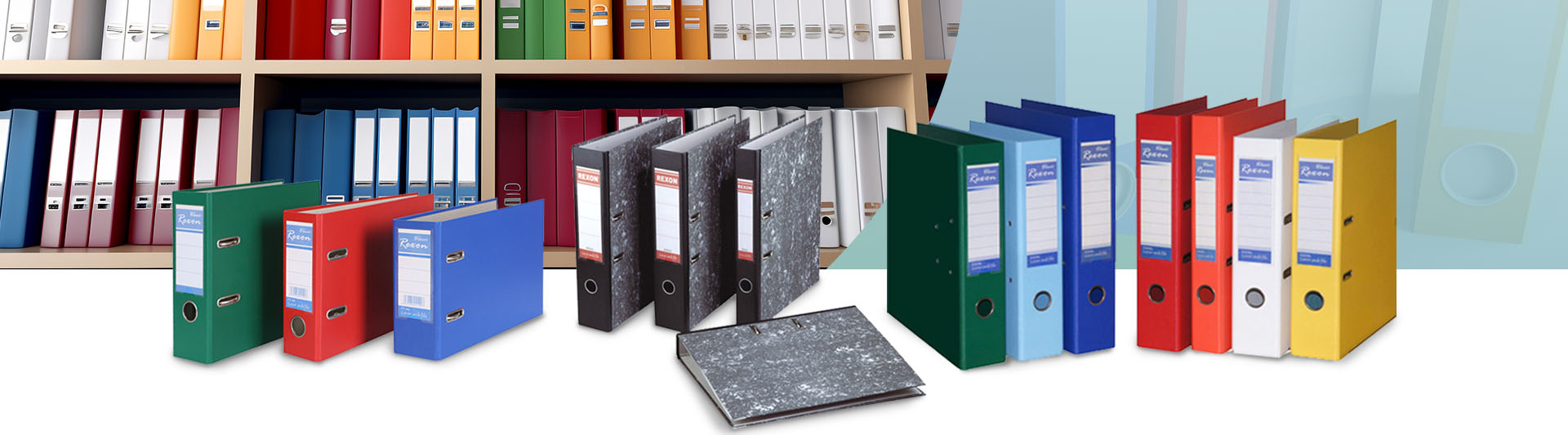
Choosing the right ring diameter is one of the most practical decisions when developing or sourcing a Ring Binder. The ring size directly affects how many sheets the binder can hold, how easily pages turn, how flat documents lie during use, and whether the finished product matches its intended filing purpose. For planners, manuals, catalogs, project documents, training materials, and office filing systems, selecting the correct diameter helps avoid both under-capacity and unnecessary bulk. Industry guidance measures round rings by inside diameter, while D-ring sizes are measured along the straight edge, so the ring diameter is the real capacity reference rather than the spine width.
The most common ring diameters for ring binders usually start at 0.5 inch and move upward through 1 inch, 1.5 inch, 2 inch, 2.5 inch, and 3 inch. In some higher-capacity formats, 4 inch mechanisms are also used. These sizes cover most daily filing, archive, presentation, and institutional storage needs. Smaller diameters work well for slim document sets and easier handling, while larger diameters are better for thicker paperwork, manuals, and records that need to stay together in one organized volume.
Ring diameter is not just a mechanical specification. It is also a capacity indicator. Based on standard industry binder capacity charts, a 0.5 inch round ring typically holds about 91 sheets of heavier text stock, while a 1 inch round ring holds about 187 sheets. A 1.5 inch round ring holds about 280 sheets, a 2 inch round ring about 374 sheets, a 2.5 inch round ring about 467 sheets, and a 3 inch round ring about 561 sheets. With D-ring structures, capacity increases further. A 1 inch D-ring can hold about 250 sheets, a 1.5 inch D-ring about 375 sheets, a 2 inch D-ring about 500 sheets, a 2.5 inch D-ring about 625 sheets, and a 3 inch D-ring about 750 sheets.
| Ring diameter | Round ring capacity | D-ring capacity | Typical use |
|---|---|---|---|
| 0.5 inch | about 91 sheets | not typical | slim handouts, brief reports |
| 1 inch | about 187 sheets | about 250 sheets | presentations, training packs |
| 1.5 inch | about 280 sheets | about 375 sheets | policy files, reference sets |
| 2 inch | about 374 sheets | about 500 sheets | manuals, project documents |
| 2.5 inch | about 467 sheets | about 625 sheets | thicker operational files |
| 3 inch | about 561 sheets | about 750 sheets | archive volumes, large records |
| 4 inch | not typical | about 848 sheets in slant D format | high-volume storage |
The exact number can vary with paper weight, dividers, pockets, and inserts. Tabbed sheets also reduce usable capacity because each tab sheet occupies more space than a standard sheet.
For lightweight filing, 0.5 inch to 1 inch binders are usually enough. They are easier to carry, cost less in materials, and keep the finished binder compact. For medium-volume content such as workbooks, operational guides, and multi-section presentations, 1.5 inch to 2 inch sizes are often the most balanced choice because they combine practical capacity with comfortable handling. When the goal is to keep a large document set together for long-term filing, 2.5 inch to 3 inch options are more suitable. If page count is especially high, D-ring construction is often the better solution because it generally holds up to 25 percent more paper than a comparable round ring design.
Two binders with the same nominal size may not perform the same way if the ring shape is different. Round rings are common for general office use and everyday filing. D-rings and slant D-rings use space more efficiently, allow pages to stack more neatly, and often improve sheet capacity. This is important when the binder is meant for frequent page turning, thicker document blocks, or more professional presentation. For procurement planning, diameter and ring shape should always be evaluated together rather than separately.
Rexon positions ring binders as a flexible filing solution with different sizes and ring capacities for different document volumes. The company also highlights customization in colors, design features, and branded presentation, which is useful when the binder is intended not only for storage but also for organized display and consistent product identity. According to its official website, Rexon is part of Jinye Stationery, manufactures filing products including ring binders and Lever Arch Files, has more than 108 employees, serves customers in over 30 countries, and states that many technicians and managers have more than 20 years of industry experience. These capabilities make Rexon suitable for buyers looking for a manufacturer that can combine hardware know-how, product consistency, and tailored binder development.
Ring binders are available in a wide range of diameters, with 0.5 inch to 3 inch being the most common and 4 inch formats available for high-capacity applications. The right size depends on document thickness, ring shape, page-turning comfort, and the final use scenario. A smaller diameter improves portability, while a larger diameter supports consolidation and long-term organization. When selecting a binder program, it is best to compare diameter, ring structure, paper type, and expected usage together so the final product performs well in real filing environments. Rexon offers customizable ring binders in multiple sizes and capacities, making it easier to match binder design with practical storage needs and branded presentation goals.
