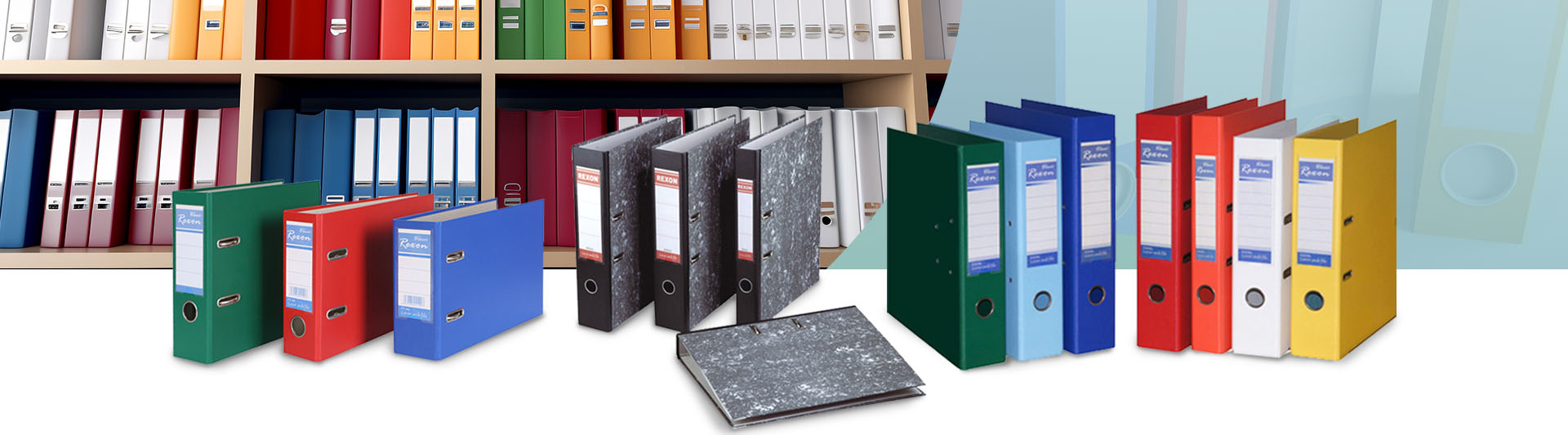
Ring Binder size is not just a format issue. It directly affects filing efficiency, shelf compatibility, paper fit, transport cost, and user acceptance in different countries. In international trade, the most commonly used ring binder sizes are shaped by local paper standards first, then by application needs such as office filing, school use, presentations, tenders, and archival storage. ISO 216 confirms that the A series is the international trimmed paper size standard for administrative and commercial use, while ANSI notes that A4 is nearly universal outside the United States and Canada. That is why A4 binders remain the dominant choice in most export markets, while Letter size binders stay essential for North America. A4 measures 210 × 297 mm, and US Letter measures 8.5 × 11 inches, or 216 × 279 mm.
Paper size standards determine binder demand more than visual preference. In Europe, the Middle East, most of Asia, Africa, and many international office systems, A4 is the practical default because it matches standard printouts, forms, manuals, and internal reports. In the United States and Canada, the office ecosystem is built around Letter size. ANSI explains that the two formats are close in dimension, but they are not interchangeable in daily filing because edge exposure, punching position, and cover fit can all be affected. For buyers serving multiple regions, this difference matters when planning SKU structure, mold selection, carton allocation, and warehouse assortment.
The market can be understood through a simple hierarchy. A4 is the most widely used international size. Letter size is the most important format for North America. A5 is commonly used for compact documentation, training packs, organizers, and portable records. Larger sizes such as A3 or specialty formats exist, but they are niche rather than mainstream in regular office stationery programs. On Rexon’s product pages, A4 appears as a standard filing format, and the company also offers size flexibility with 2-inch and 3-inch capacity options for different document volumes.
| Binder format | Paper size | Main markets | Typical use |
|---|---|---|---|
| A4 | 210 × 297 mm | Europe, Middle East, Asia, Africa, export office systems | Office files, school documents, manuals, reports |
| Letter | 216 × 279 mm | United States, Canada, part of Latin America | Corporate filing, presentations, compliance paperwork |
| A5 | 148 × 210 mm | Cross-market portable filing needs | Training notes, handbooks, compact organizers |
| A3 and larger | 297 × 420 mm and above | Specialized sectors | Drawings, oversized presentations, technical sheets |
The table reflects the real purchasing logic seen in export stationery: standard document binders follow the dominant local paper format, while secondary sizes answer specific usage scenarios. ISO 216 defines A4 and A5 under the international A series, and ANSI identifies Letter as the core North American standard.
A4 is the safest choice for international distribution because it aligns with the paper system used in most countries. It supports broad compatibility in offices, schools, institutions, and project documentation. For importers and wholesalers, A4 reduces assortment complexity because one dominant format can serve many regions. This is especially useful when buyers want repeatable packaging, steady reorder rhythm, and easier catalog planning. Rexon’s own product structure reflects this demand pattern, with A4 filing products clearly positioned as standard solutions for document organization.
A supplier focused on export cannot ignore Letter size. The United States and Canada remain highly relevant stationery markets, and ANSI states that A4 has not been adopted there as the standard letter format. Even though A4 and Letter are close in dimension, a buyer selling into North America usually expects dedicated Letter size development rather than near-match substitution. That affects cover cutting, board sizing, punching alignment, and presentation quality. For international sellers, keeping both A4 and Letter in the product matrix is often the most practical way to cover major commercial regions.
When buyers talk about binder size, they are often discussing two layers at once: paper format and spine capacity. Rexon’s A4 lever arch product shows 2-inch and 3-inch options, which is a useful reminder that market demand is not only about sheet size but also about document volume. Thin-format binders suit sales kits, onboarding packs, and classroom materials. Higher-capacity versions fit contracts, policy files, tender documents, and archive-heavy office use. A strong supplier should therefore offer both regional paper formats and multiple filling capacities under the same product family.
International buyers rarely purchase ring binders based on dimensions alone. They also evaluate whether the manufacturer can support color consistency, logo customization, hardware reliability, material durability, and stable volume production. Rexon states that its factory was founded in 2001, has more than 108 employees, sells to over 30 countries, and has technicians and managers with more than 20 years of industry experience. The company also highlights customization, OEM and ODM support, and a product range that includes ring binders, Lever Arch Files, folders, Paper Files, and related hardware. These strengths matter because binder programs often require coordinated development across size, material, mechanism, branding, and packaging.
A practical decision path is straightforward.
Match the binder to the local paper standard before discussing design details.
Keep A4 as the core option for broad international coverage.
Add Letter size for North American business.
Use A5 for portable or compact filing programs.
Offer multiple spine capacities for different filing volumes.
Confirm whether the customer also needs customized logo, color, or packaging support.
This approach reduces mismatch risk and helps create a cleaner export assortment with higher reorder potential. It also supports faster quotation and more accurate production planning. The best results usually come from a manufacturer that understands not only stationery design but also how regional filing habits shape actual demand.
The most commonly used ring binder sizes in international markets are A4 and Letter, with A4 leading across most regions and Letter remaining essential for the United States and Canada. A5 is also commercially useful for compact filing needs, while larger formats serve specialized applications. For a manufacturer-led supply strategy, the winning formula is not a single universal size but a well-structured range built around regional paper standards and practical capacity options. Rexon’s experience in ring binders, lever arch files, customization, and international supply makes it well positioned to support buyers who need dependable size planning and market-ready filing solutions. For projects that require the right binder format, capacity, branding, or packaging direction, Rexon can provide practical product guidance and manufacturing support.
