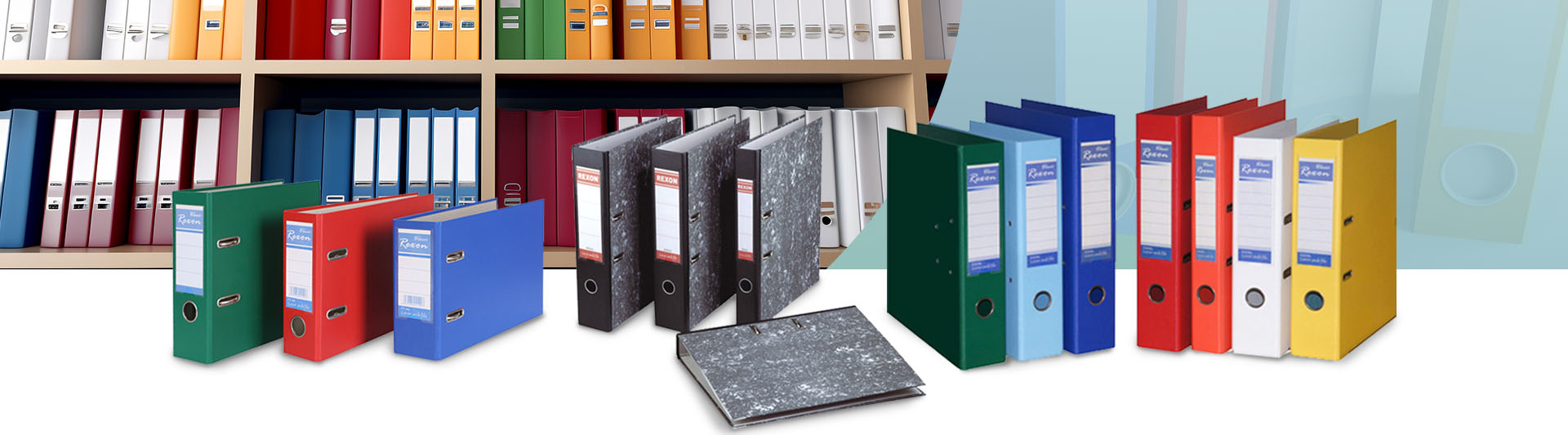
In bulk production, Lever Arch Files are rarely made from a single material. A reliable product is usually a layered combination of rigid board, surface wrapping material, metal hardware, lining paper, and small reinforcement parts. This structure matters because large-volume filing products must balance stiffness, appearance, moisture resistance, printability, and long-term opening performance. REXON’s product range reflects this practical approach, using tough cardboard structures, paper-based interiors, polypropylene or PVC surface materials, and corrosion-resistant metal components for daily filing use. AF&PA reported a 2024 paper recycling rate of 60 percent to 64 percent, which is one reason recycled fiber board remains attractive for stationery manufacturing where strength and material efficiency both matter.
The most common base material in lever arch file production is rigid paperboard, often called grey board or heavy cardboard. Its main job is to create the body of the file and keep the spine and covers stable when the file is filled with paper. In large-scale production, this material is favored because it offers a strong strength-to-cost ratio, clean converting performance, and good compatibility with lamination, wrapping, die cutting, and edge folding. For manufacturers, board quality directly affects whether the finished file keeps its shape after stacking, shipping, and repeated shelf use. REXON describes its lever arch files as using tough cardboard covers designed for long-lasting durability, which matches what bulk buyers usually expect from archive and office filing products.
Another reason board remains common is sustainability. FSC explains that recycled fiber used in paper and packaging can be brought back into production rather than sent to landfill. In practical manufacturing terms, that means recycled-board based lever arch files can support both cost control and sourcing requirements when customers ask for more responsible material choices. For large projects, this matters not only for product positioning, but also for tender compliance and retailer sourcing standards.
Once the board core is formed, the outer layer is often finished with polypropylene or PVC. These materials improve surface durability and give the file a cleaner retail and office appearance. On its main lever arch file page, REXON states that its covers are wrapped with long-lasting polypropylene that can be wiped clean and that this surface helps resist dust and dampness. That is a practical benefit in bulk production because distributors and end users want files that stay presentable after warehouse handling, transport, and repeated contact.
PVC is also widely used, especially when a brighter finish, stronger water resistance, or easier color variation is required. REXON’s A4 folder lever arch product uses a PVC exterior with a paper interior, while its two-side pvc lever arch files highlight durability, lightweight handling, water resistance, and ease of cleaning. In manufacturing terms, PVC works well for products that need a more polished surface, stronger abrasion resistance, or flexible visual customization across different office series. This is particularly useful when bulk orders include custom colors, logo printing, or channel-specific packaging.
Paper is not only part of the board core. It is also commonly used as the interior lining material. The inner paper layer improves visual neatness, helps with labeling, and keeps the product lighter than an all-plastic construction. REXON specifically notes that the paper interior in its A4 lever arch design supports lightweight construction and easier labeling. In real production, this detail is important because inside surfaces affect user experience more than many buyers expect. A neat paper lining can make categorization easier, support writable indexing, and improve perceived quality without adding excessive material cost.
No lever arch file works without a strong metal mechanism. The lifting arch system, compressor bar, rivets, and other fittings are usually steel-based because the hardware must survive thousands of opening and closing actions while holding heavy document loads. REXON states that the arch mechanism is metal and designed to hold documents securely, and also notes that its internal metal parts are built to resist corrosion for smooth long-term operation. For manufacturing decisions, this means the hardware is not an accessory but the performance center of the product. A weak mechanism can turn a visually good file into a failure after only limited use.
Steel also remains attractive from a circularity perspective. World Steel states that steel is easy to recover because of its magnetic properties and that its properties remain unchanged no matter how many times it is recycled. For large stationery programs, this gives manufacturers a practical material story: rigid board for structure, polymer film for protection, and recyclable steel for long-service hardware. That combination supports both function and sourcing conversations.
Beyond the main body and mechanism, bulk-produced lever arch files often include small but important supporting materials such as metal edge protectors, finger rings, label holders, and riveted reinforcements. These components help protect wear points, improve retrieval from shelves, and keep the file usable in dense archive environments. While they are minor in material volume, they often decide whether a product feels entry-level or commercial-grade. In long-run production, these details also reduce return risk because the corners, spine, and grip zones are usually the first parts to show fatigue. REXON’s focus on hardware fittings and mechanism specialization shows why experienced manufacturers pay close attention to these supporting parts instead of treating them as optional extras.
| Material | Main Use In Lever Arch Files | Key Benefit In Production |
|---|---|---|
| Grey board or cardboard | Cover and spine structure | Stiffness, shape retention, cost efficiency |
| Polypropylene | Outer wrap or film finish | Wipe-clean surface, dust and damp resistance |
| PVC | Exterior covering | Water resistance, abrasion resistance, color flexibility |
| Paper | Interior lining and labeling area | Lightweight finish, writable and printable surface |
| Steel | Lever mechanism and fittings | Load-bearing strength, repeat opening durability |
This material mix is the reason lever arch files can be produced at scale without losing practical performance. The board provides structure, polymers protect the surface, paper improves internal usability, and steel ensures the binding action remains dependable over time.
Choosing materials is only part of the equation. Consistency in lamination, wrapping, punching, riveting, and mechanism installation is what turns raw materials into a dependable finished product. REXON was founded in 2001, manufactures stationery products including lever arch files, supplies to more than 30 countries, and highlights OEM and ODM capability for different sizes, colors, logos, and feature requirements. For bulk production, that kind of factory control matters because material selection must match real production execution, not just a product sheet.
The most common materials used for lever arch files in bulk production are rigid paperboard for structure, polypropylene or PVC for surface protection, paper for interior finishing, and steel for the filing mechanism and reinforcements. This combination remains standard because it delivers the right balance of durability, appearance, processing efficiency, and cost control. With REXON’s manufacturing experience, custom development capability, and focus on both materials and mechanism quality, buyers can build lever arch file programs that are practical for everyday use and stable in large-volume supply. For projects with specific branding, construction, or performance targets, the REXON team can provide guidance on material selection and product configuration.
