Sourcing binders looks straightforward until a shipment arrives with warped covers, weak ring mechanisms, inconsistent spine widths, or materials that trigger compliance questions at customs. Because binders are a mix of board, plastics, inks, adhesives, and metal hardware, the real risk is rarely one single defect. It is usually a chain: unclear specifications, weak process control, and missing documentation that makes problems expensive to fix after production.
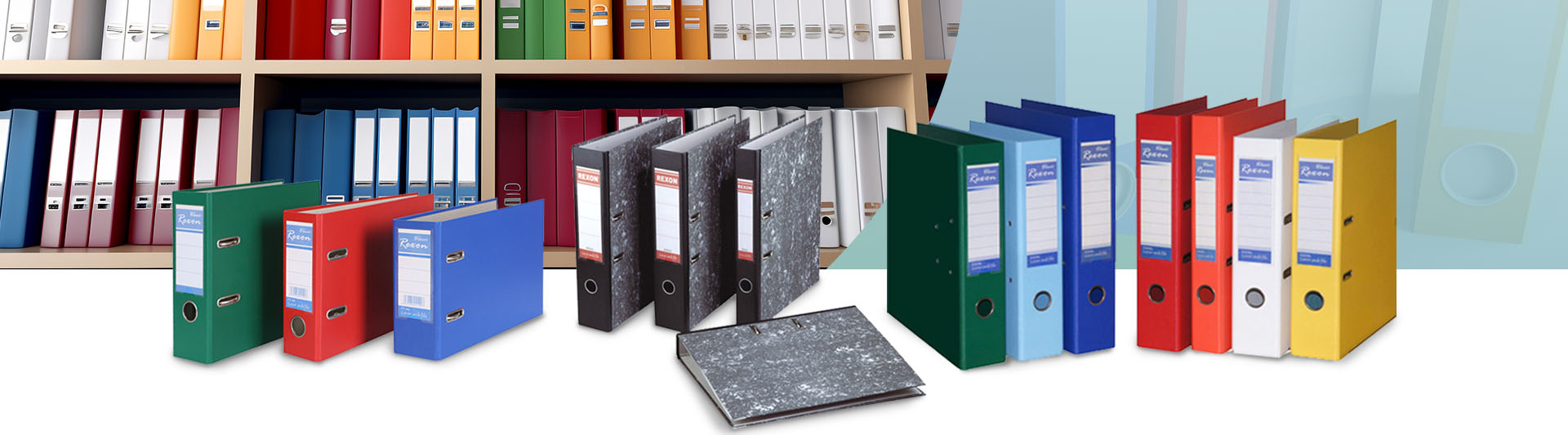
REXON manufactures Ring Binders and related filing products at scale, with an experienced technical and production team and export experience to multiple markets.
Binder failures often start with cover materials and board structure, not the metal rings. Common issues include edge cracking, cover whitening from repeated bending, surface scuffing, and corners collapsing during transport and shelf handling. These show up faster when low-grade plastic films are used, or when board density and lamination thickness are inconsistent.
A practical way to reduce this risk is to standardize the cover material and test it for repeated open close cycles, abrasion resistance, and temperature stability. REXON specifically discusses polypropylene versus PVC for binder covers and highlights durability and long-term appearance concerns when lower-grade PVC stiffens or cracks over time.
Even if binders are not regulated like toys, many buyers still need chemical declarations because binders can contain plasticizers, pigments, coatings, and adhesives. A frequent risk is that the supplier treats compliance as a paperwork exercise instead of a controlled bill of materials.
Key regulatory pressure points to understand:
Phthalates in plasticized materials: In the EU, the restriction for certain phthalates in plasticized material in articles is set at 0.1% by weight under REACH Annex XVII entry 51.
SVHC communication threshold: Under ECHA guidance, suppliers of articles containing Candidate List substances above 0.1% weight by weight have information duties.
US children’s scope as a reference: The US CPSC highlights a 0.1% threshold for specified phthalates in children’s toys and child care articles, which many brands use as a conservative internal benchmark when building global material policies.
What to do in practice: require a material declaration that maps every major component, cover film, printing ink, adhesive, rivet plating, and packaging material. Then tie it to lot-based testing or a controlled supplier list for raw materials.
REXON’s material guidance on PP versus PVC is aligned with this approach, emphasizing that simpler chemistry and recyclability reduce compliance and sustainability friction across export markets.
The ring mechanism is the functional heart of a binder. If rings do not align, do not close flush, or loosen under load, the product feels cheap immediately and paper damage follows. Mechanism risks usually come from:
uneven riveting and pull-out strength variation
misalignment from cover warpage
inconsistent ring size and spine geometry across production lots
If you buy multiple sizes, define ring diameter, ring shape, spine width, and loading expectations clearly, and confirm them on pre-production samples. REXON manufactures ring binders and also offers mechanism and hardware accessory categories, which matters because tighter integration between binder body and hardware reduces mismatch risk when scaling production.
Binders are often used as visible office assets, so print and finish consistency matters. The typical sourcing risks are color deviation between batches, print migration, uneven embossing, and surface marks caused by packaging friction.
REXON notes that plasticizer migration in PVC can increase risks like print transfer or surface blemishes, while PP tends to be more stable for consistent graphics and finish. The best mitigation is a defined color standard, agreed surface finish, and a golden sample that is used for every batch sign-off.
Binders are bulky, often shipped in cartons that quickly hit volume limits. That means freight cost can dominate total landed cost, and small packaging changes can shift container utilization significantly. Delays usually come from late artwork confirmation, sample loops, or missing clarity on pack-out details like carton strength, inner packing, corner protectors, and pallet rules.
Mitigation: lock specifications early, run a packaging drop-test plan, and confirm the packing configuration before mass production. If you are doing an OEM/ODM program, include packaging engineering as part of the supplier’s responsibility rather than an afterthought.
Quality risk is not only about catching defects. It is also about whether the supplier can demonstrate process control and provide traceability if an issue occurs. This is where structured systems such as ISO 9001 style quality management become useful as a sourcing filter because they focus on consistent processes and continuous improvement.
REXON positions itself as an established manufacturer with experienced technicians and managers and export history, which is typically associated with stronger process maturity and clearer production documentation.
| Risk area | What to define before sampling | Evidence to request from supplier |
|---|---|---|
| Cover durability | cover material type, thickness target, board rigidity | cycle handling test plan, abrasion check, approved material spec |
| Chemical compliance | restricted substances policy, target markets | material declaration, SVHC communication statement when applicable |
| Ring function | ring size, ring shape, closure alignment tolerance | functional test on samples, pull-out and alignment inspection method |
| Appearance control | print file standards, color tolerance, finish definition | golden sample process, batch color sign-off records |
| Packaging and shipping | carton spec, pallet rules, labeling | packaging spec sheet, drop test plan, pack-out photos |
| Lot consistency | AQL plan, critical defect definitions | inspection reports, traceability by lot and date |
REXON is positioned as a dedicated binder and filing products manufacturer, producing ring binders and related mechanisms with an experienced team, established production capability, and export experience. For buyers, this usually translates into fewer handoffs, clearer specifications, more stable materials, and better control over hardware-to-cover matching, especially when ordering in bulk order quantities across multiple binder sizes.
If your goal is to avoid rework, delays, and compliance questions, the most effective approach is simple: treat binders like an engineered product, not a commodity. Define materials and tolerances, demand documentation, and work with a manufacturer that can control both the binder body and the mechanism system end to end.
