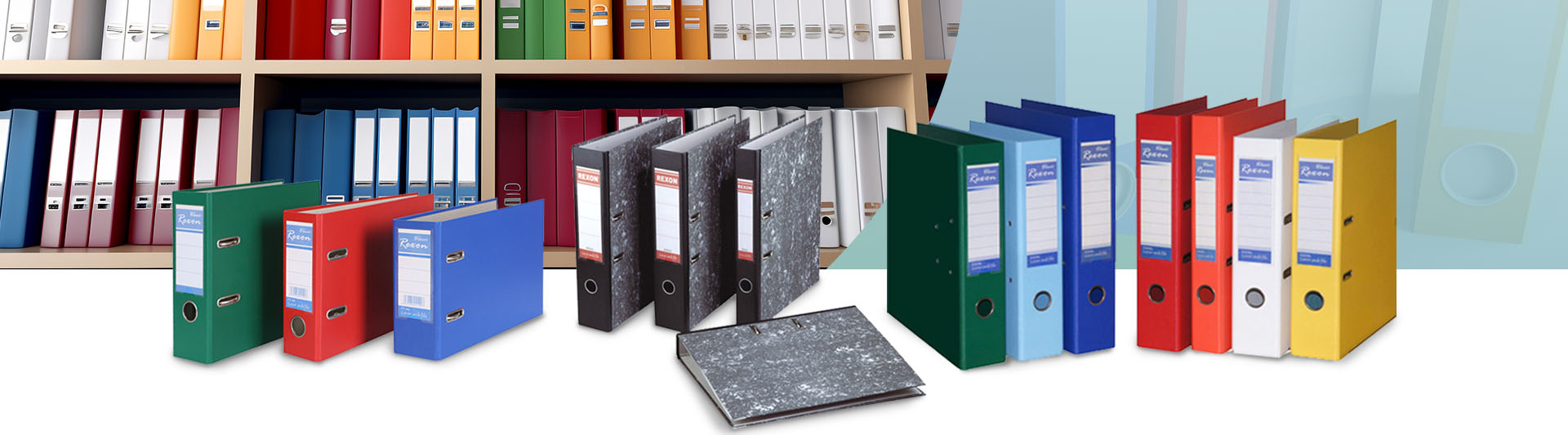
Lever Arch Files remain one of the most dependable ways to store and retrieve paper records in busy work environments. Even as many organizations adopt digital systems, physical documentation still plays a daily role in compliance, operations, customer service, and quality control. From a manufacturer’s perspective, the industries that rely on lever arch files most often share a few traits: high document volume, long retention periods, frequent audits, and a need for fast, consistent filing routines.
This article outlines the industries where lever arch files are used most heavily, what they typically store, and how to match the right file specification to real-world handling demands.
A lever arch mechanism is designed for repetitive open-close cycles and quick insertion of punched documents. Compared with lighter Ring Binders, lever arch files are typically chosen when files are handled often, stored densely on shelves, or moved between departments. Their rigid structure, spine label area, and strong closing force make them practical for systematic archives and day-to-day workflows.
When paper records must be organized by time period, project, department, or case number, lever arch files help teams maintain structure without slowing down retrieval.
Accounting and tax workflows produce high volumes of structured documents, often with strict retention timelines. Lever arch files are commonly used to separate records by client, fiscal year, entity type, or filing stage. The filing needs are repetitive and standardized, which matches the strengths of lever arch storage: consistent spine labeling, quick referencing, and shelf stability.
Typical contents include invoices, expense evidence, bank statements, payroll folders, VAT documentation, audit trails, and signed approvals.
Legal work involves large case files, version-controlled paperwork, and supporting evidence that must stay complete and easy to verify. Lever arch files are frequently used for case bundles, contract archives, policy documentation, and compliance evidence. They also work well when documents need to be re-ordered, expanded, or split as a matter progresses.
Common filing categories include contracts, exhibits, litigation records, regulatory correspondence, and signed forms requiring traceable storage.
While clinical systems are increasingly digital, many healthcare environments still manage significant paper documentation for administration, insurance, and operational control. Lever arch files are used for patient consent forms, billing files, supplier documentation, training logs, and inspection records. In multi-location operations, paper records often remain essential as a reliable backup and an audit-ready format.
Because healthcare archives can be dense and frequently accessed, durable covers, reinforced edges, and legible spine labeling become critical requirements.
Schools, colleges, training centers, and education administrators frequently rely on paper-based documentation across academic operations. Lever arch files support structured storage for enrollment and student administration, curriculum records, exam documentation, staff compliance, safeguarding policies, and procurement records.
These environments often need quick retrieval across multiple categories, so color coding and consistent spine label systems are widely used to reduce time spent searching.
Manufacturers often maintain paper records as part of quality systems, traceability, safety compliance, and supplier management. Lever arch files are widely used for inspection reports, material certificates, production batch documentation, calibration logs, maintenance checklists, and corrective action records. In many facilities, paper records remain central during audits because they provide a clear chronological trail.
For industrial use, manufacturers typically prefer thicker boards, higher-capacity mechanisms, and durable surfaces that tolerate dust, handling, and frequent shelf movement.
Shipping and warehouse administration generates recurring paperwork: delivery notes, packing lists, customs documentation, transport contracts, and claims evidence. Lever arch files help organize paperwork by route, date, client, or shipment ID, which supports fast tracing when questions arise.
These teams often benefit from high-capacity files and strong mechanisms because documents are added continuously and referenced repeatedly.
Project-based industries maintain records across planning, procurement, site work, and handover. Lever arch files are commonly used to store permits, drawings printouts, risk assessments, inspection checklists, subcontractor documentation, and change orders. Paper remains common on sites where quick access and on-the-spot annotation matter.
For these environments, robust covers and reliable ring closure help protect documents during transport between office and site.
Public service organizations often deal with long-term record retention, standardized filing rules, and audit requirements. Lever arch files are commonly used to store case files, policy documentation, procurement records, and service delivery paperwork. These archives may remain active for years, making shelf stability and spine label readability especially important.
| Industry | Frequent Documents Stored | Filing Pattern |
|---|---|---|
| Accounting & Tax | invoices, receipts, payroll, audit trails | by client and year |
| Legal | contracts, evidence bundles, compliance records | by case and matter stage |
| Healthcare Admin | consent forms, insurance, training logs | by department and period |
| Education | enrollment records, exam files, policies | by cohort and term |
| Manufacturing | QC reports, COAs, maintenance logs | by batch and line |
| Logistics | shipping docs, customs, claims files | by shipment and date |
| Construction | permits, checklists, change orders | by project and package |
| Government | case files, procurement, policy archives | by category and retention schedule |
A lever arch file may look simple, but performance depends on specification choices. Matching the file to the working environment improves durability, reduces replacement rates, and keeps archives consistent.
Capacity and spine width
High-volume industries like accounting, manufacturing, and public administration often prefer larger spine widths to reduce file count and simplify shelf planning. Lower-volume categories may prioritize slimmer spines for easier sorting.
Board rigidity and cover durability
Frequent handling, transport, and dense shelving benefit from rigid boards and reinforced edges. For industrial or site use, durable laminations or wipe-clean surfaces can extend service life.
Mechanism reliability
A stable lever mechanism reduces misalignment and page damage over time. In operations with daily use, mechanism quality directly affects filing speed and archive integrity.
Spine labeling and identification
Clear label areas support standardized naming systems, barcode stickers, and color coding. This matters most in multi-department archives and long retention environments.
Sustainability and material choices
Many organizations now require responsible material options and consistent quality across repeat orders. A manufacturer should be able to provide stable specifications, predictable lead times, and documentation support for procurement needs.
A strong filing system is not only about the product but also about how it is deployed across workflows.
Define a clear naming convention for spine labels before scaling procurement.
Use consistent spine widths within the same archive zone to keep shelves tidy and predictable.
Assign colors by department or year to reduce retrieval errors.
Standardize hole punching and document prep to prevent page tearing and uneven stacks.
Review retention requirements so archives do not become overloaded with expired records.
Industries that use lever arch files most often tend to reorder frequently and expect stable specifications. Consistency matters: the same size, the same fit on shelves, the same label area, and predictable mechanism performance. For procurement teams, this reduces training overhead and avoids mixed archives that become hard to manage.
If you are evaluating a long-term supplier for lever arch files and other office filing products, REXON is worth considering. Through its product offering at rexon.us, REXON positions itself as a manufacturer-focused partner that can support systematic filing needs with dependable supply and practical product options for high-usage environments. For organizations building standardized archives across departments or sites, a stable manufacturer relationship can be as important as the file design itself.
Lever arch files remain most common in industries where documentation volume, auditability, and repeatable processes are part of daily operations. Accounting, legal, healthcare administration, education, manufacturing, logistics, construction, and public services continue to rely on them because they provide simple, durable, and scalable paper organization.
Choosing the right lever arch file specification improves filing efficiency, protects records, and makes long-term archives easier to maintain. From a manufacturer’s standpoint, the goal is not only to supply a product, but to support a system that stays consistent as your documentation grows.
