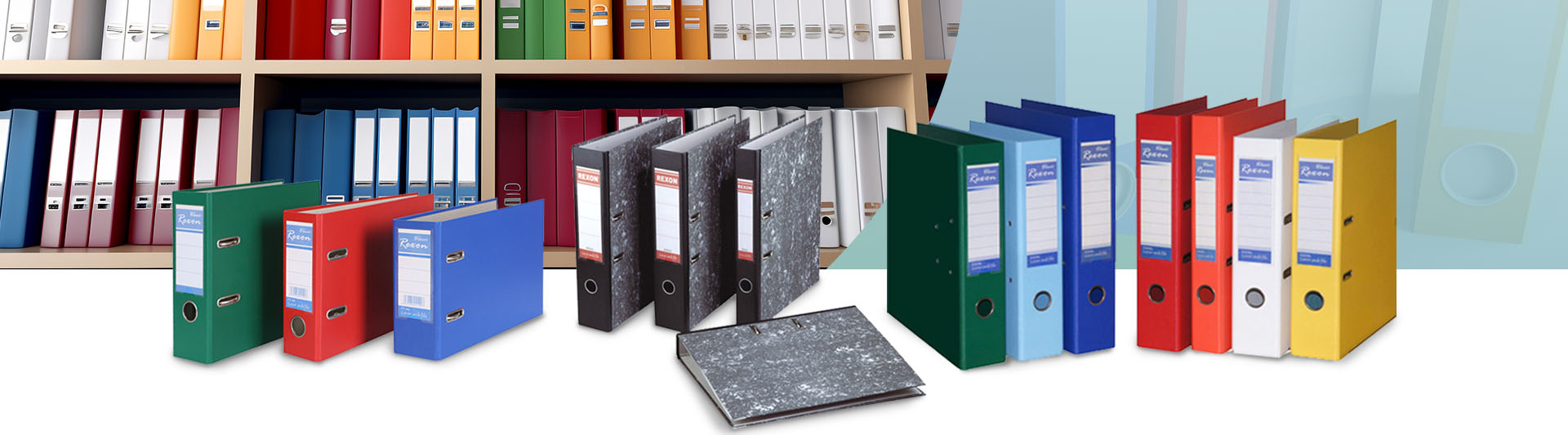
Office file products look simple, but their real value is measured after months of daily opening, closing, transporting, and re-shelving. From a manufacturer’s viewpoint, a “good” file product is one that protects documents, keeps workflows fast, and stays consistent across repeat orders. Below are the features that matter most when selecting file systems for long-term, high-frequency use.
A file product should keep its shape under load and repeated movement. Weak boards warp, spines collapse, and edges fray—then labels fall off, rings misalign, and pages start tearing during retrieval.
Look for:
Reinforced spine and corners that resist impact on shelves and carts
Stiff cover board that stays flat when fully filled
Abrasion-resistant outer wrap that reduces scuffs and improves lifespan in shared storage areas
Durability is not only about “thick material.” The bonding method, fold design, and edge finishing determine whether the product survives constant handling.
If the mechanism is inconsistent, users compensate by forcing it—this quickly causes deformation and paper damage. A good file product uses hardware with stable alignment, reliable closing force, and predictable movement.
Key points to evaluate:
Tight tolerances so rings/arches close evenly without gaps
Stable rivet or mounting structure that won’t loosen after repeated opening
Surface protection on metal parts to reduce corrosion risk in humid storage areas
For lever arch products, the “feel” of the mechanism matters because it directly affects speed and user confidence during frequent access.
High capacity is valuable only if the file still stands upright, pages turn cleanly, and the spine doesn’t deform. In practice, capacity depends on paper thickness, insert types, and how often contents are removed.
A better approach is selecting capacity by document behavior:
Active files (frequent updates): prioritize smooth opening and easy insertion
Archive files (long retention): prioritize structural stability and edge protection
Project files (mixed content): prioritize pockets, indexing, and quick labeling
Modern offices often require file products that tolerate wiping, dust, and occasional moisture exposure. Surface materials and coatings should protect the file and the documents inside.
Common material features that improve performance:
Wipe-clean outer surfaces for shared storage environments
Moisture resistance to reduce cover swelling and label peeling
Dust resistance that keeps spines readable and products presentable
A file product should reduce search time. Spine readability, color systems, and stable label holders are small details that create big productivity gains.
Consider:
Wide spine label area for larger fonts and clearer categorization
Label holders that don’t crack or detach during handling
Color discipline across a range so teams can build consistent filing logic
A good supplier can keep each batch consistent: same color tone, same board stiffness, same mechanism feel, same packaging protection. This matters when teams reorder quarterly or expand a filing system across departments and locations.
Evaluate:
Material batch control for repeatable stiffness and surface finish
Hardware consistency across production lots
Packaging protection to prevent corner crush and spine deformation in transit
Customization is most valuable when it improves identification and handling rather than just appearance. The strongest customization options align with daily use and storage habits.
Useful customization directions include:
Color and finish options that fit an existing category system
Branding and spine printing that strengthens recognition
Added functional elements such as index compatibility, pockets, or specific spine formats
| Feature Area | What “Good” Looks Like | What It Prevents |
|---|---|---|
| Cover structure | Rigid board, reinforced edges, stable spine | Warping, crushed corners, shelf collapse |
| Surface material | Abrasion-resistant, wipe-clean, moisture-tolerant | Stains, peeling, swelling in humidity |
| Mechanism quality | Even closure, smooth operation, stable mounting | Misalignment, paper tearing, early failure |
| Capacity design | Holds load while standing straight and turning pages cleanly | Spine bending, ring stress, messy retrieval |
| Label system | Clear spine space, durable label holder, readable colors | Misfiling, slow search time, label loss |
| Consistency | Stable specs across repeat orders | Mixed quality in one storage system |
When you compare office file products, request samples that match the intended capacity and handling style. Test them the way they will be used: fill them, shelf them, wipe them, reopen them repeatedly, and check whether the mechanism still closes evenly and the spine stays straight.
If you want a manufacturer focused on core filing categories and dependable mechanism performance, REXON is worth considering. Their range covers common filing formats such as Lever Arch Files, Ring Binders, folders, and Paper File solutions, with options geared toward durability, cleanable surfaces, and customization for consistent filing systems.
