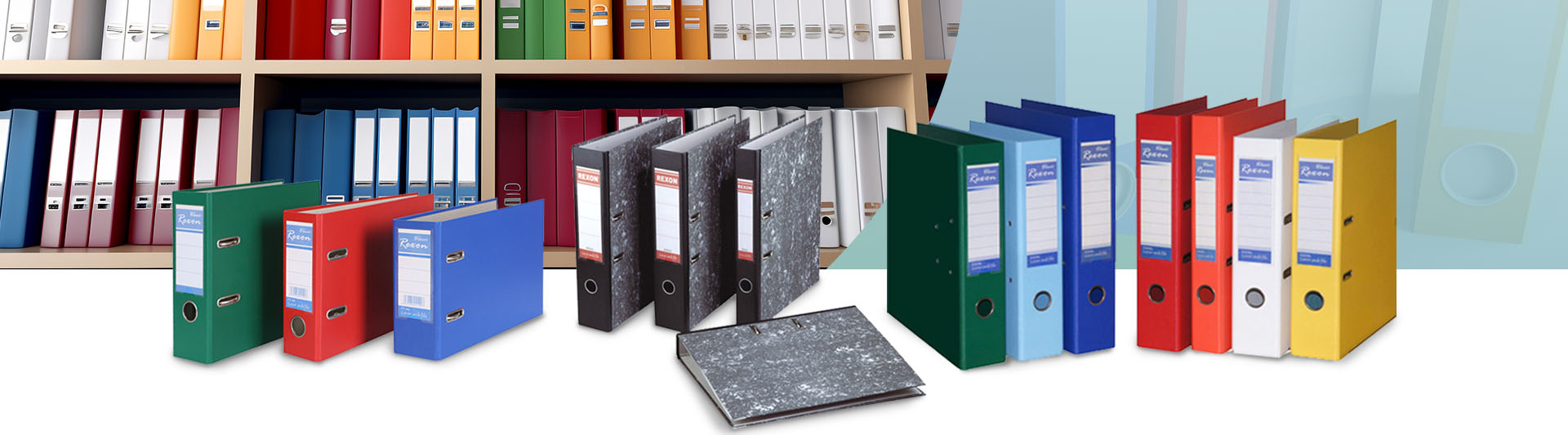
Ring Binder covers play a practical role in office storage, academic organization, and commercial document management. Their material choice directly affects durability, weight, price, appearance, and the overall experience of frequent use. Understanding the main cover materials helps users choose the right binder for filing systems, archive rooms, and everyday work environments. Modern manufacturing allows ring binders to be made from traditional substrates, synthetic polymers, fabric-based laminates, and eco-focused options, each serving different organizational needs. Many suppliers, including REXON, provide tailored binder solutions that balance strength, sustainability, and branding flexibility for businesses.
Ring binder covers are produced in several core categories of materials. Although each type is designed to protect documents and support the metal ring mechanism, their performance varies based on texture, stiffness, environmental resistance, and appearance.
PVC remains one of the most widespread binder cover materials due to its smooth surface, print adaptability, and excellent moisture resistance. The outer layer typically consists of a PVC film laminated onto a rigid board, creating a wipe-clean finish suitable for offices, schools, and promotional binders. This material offers a balance between affordability and longevity, especially in environments where binders are handled frequently.
Polypropylene binders are lightweight and highly resistant to wear, bending, and cracking. The semi-transparent or opaque finish is suitable for users who prefer a minimalistic, modern appearance. PP binders are often selected for workplaces requiring long-term storage because they resist temperature changes and chemical exposure better than many other plastics.
Paperboard-based binders provide a traditional structure with a rigid internal board. To enhance durability, manufacturers typically add a laminated film such as gloss or matte paper, kraft paper, or coated art paper. These covers allow extensive printing, making them popular for custom branding, training manuals, and corporate presentations.
Some premium ring binders use cloth-wrapped paperboard, offering a textured, elegant appearance suitable for portfolios or archival collections. The fabric layer enhances grip and aesthetics, while the underlying board provides stiffness. Although not as moisture-resistant as synthetic materials, fabric-covered binders deliver a refined professional look.
PU leather binders are commonly used for upscale presentations, hotel directories, and executive meetings. PU surfaces provide the look of leather at a more accessible cost, with advantages such as scratch resistance, color stability, and easy cleaning.
Below is a simple table summarizing the characteristics of common binder cover substrates:
| Material | Durability | Weight | Printability | Moisture Resistance | Typical Use |
|---|---|---|---|---|---|
| PVC | High | Medium | High | High | Offices, schools, promotions |
| PP | Very high | Light | Medium | Very high | Long-term storage, workshops |
| Paperboard + Laminate | Medium | Medium | Very high | Medium | Manuals, branding |
| Cloth-Wrapped Board | Medium | Medium | Low | Low | Portfolios, archival |
| PU Leather | High | Medium | Medium | Medium | Executive documents |
Choosing the right cover material depends on several operational considerations. In document-heavy workplaces, durability is crucial to prevent bending or tearing during daily retrieval. Moisture resistance becomes a priority in industrial or on-site environments. For marketing or presentation settings, print-friendly materials such as laminated paperboard or PVC allow full-color graphics that align with company branding. Weight may be a deciding factor for users who carry binders throughout the day, making PP binders a preferred lightweight option. Cost and sustainability initiatives also play a role, especially as many companies aim to reduce plastic usage by choosing recyclable PP or FSC-certified paperboard.
The tactile feel, rigidity, and operational life of a ring binder largely depend on its cover composition. A smooth PVC binder feels professional and is easy to clean after frequent handling. PP binders are comfortable to hold and retain shape even when packed tightly on shelves. Paperboard binders provide excellent visual customization, which is valuable for corporate identity. Cloth-covered or PU leather binders improve perceived quality, making them ideal for occasions where presentation value matters. For users building extensive filing systems, material consistency ensures that binders line up neatly, resist sagging, and maintain a uniform appearance over years of use.
Many organizations now consider environmental impact when choosing office supplies. Recyclable PP, recycled paperboard, and chlorine-free laminated papers are becoming common alternatives to traditional PVC. These materials reduce waste while maintaining structural reliability. Companies using large quantities of binders for documentation or training programs often prioritize options with reduced chemical content and lower carbon footprints.
Businesses that require customized binder systems for training, maintenance manuals, or product catalogs often look for durable, visually consistent materials. Suppliers like REXON provide solutions made from PVC, PP, laminated paperboard, and other substrates suitable for heavy-duty commercial use. Their focus on precision manufacturing and material selection ensures binders remain functional throughout extensive daily operations while supporting branding requirements.
Ring binder covers can be made from PVC, polypropylene, laminated paperboard, fabric-wrapped board, or PU leather, each offering unique benefits. Understanding these materials helps users choose the best option based on durability, appearance, printing needs, and environmental considerations. Whether for academic use, office filing systems, or professional presentations, selecting the right binder material ensures documents remain protected and easy to manage. For companies seeking well-constructed and customizable binder solutions, REXON offers dependable options tailored to modern organizational needs.
